BLOW UP IRAN? WHY
If you want to understand this war, don’t start with the speeches — start with the money. When the official explanations fall apart, the financial trail starts looking a whole lot more interesting.
3/1/20262 min read
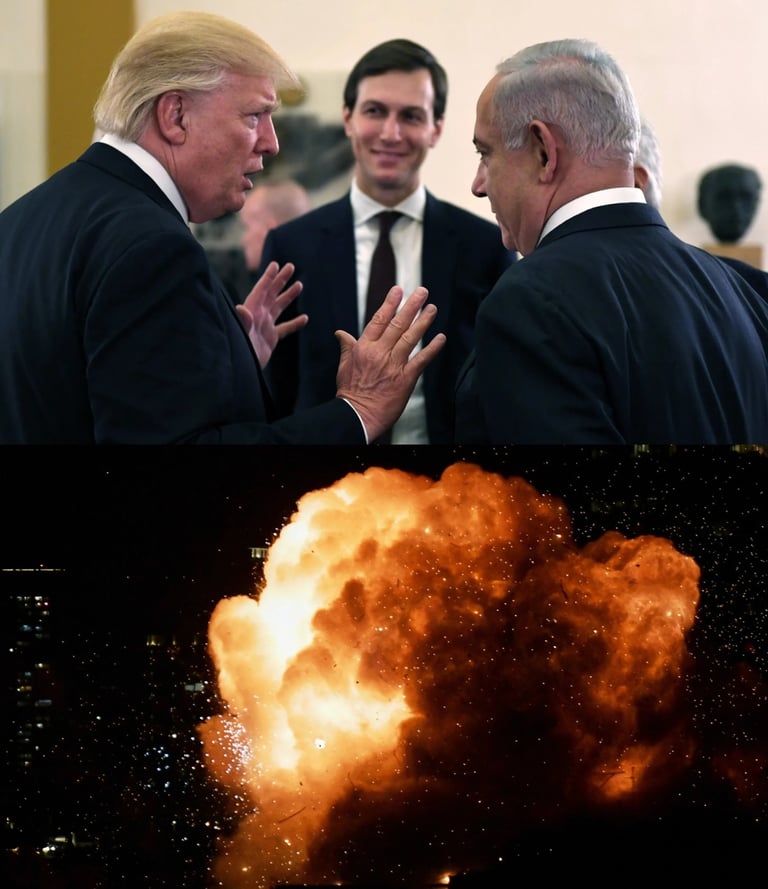
Trump just treated U.S. foreign policy like it was a real estate closing. For the price of a luxury jet and a few conveniently timed crypto windfalls, American troops are now involved in a war that Gulf monarchies and Netanyahu have wanted for years but couldn’t pull off alone.
Days before the strikes, his own Secretary of State acknowledged Iran wasn’t actively enriching uranium. Trump himself had bragged last year that he had already “obliterated” their nuclear program. Iran had reportedly signaled in Switzerland that it would not stockpile enriched uranium. And yet by Saturday morning, bombs were falling on Tehran while kids were walking to school. So much for imminent threat.
The justifications unravel the second you tug on them. If Iran wasn’t racing toward a bomb, if the program was already “obliterated,” if diplomacy was still in play, then what exactly triggered the missiles? Follow the incentives.
Qatar hands over a $400 million Boeing 747 — a flying palace that conveniently ends up tied to Trump’s presidential library foundation. The UAE steers $2 billion through a crypto-linked financial deal into Trump-family interests. The Saudis park $2 billion with Jared Kushner’s investment fund the moment he leaves government. Just a coincidence, we’re told. Always a coincidence.
And who was floating around Iran talks before the bombs? Kushner, financially backed by Iran’s regional rivals. Alongside Steve Witkoff, Trump’s real estate confidant, whose own family business was reportedly courting Qatari sovereign wealth money. The Venn diagram between policy and profit looks less like overlap and more like a single circle.
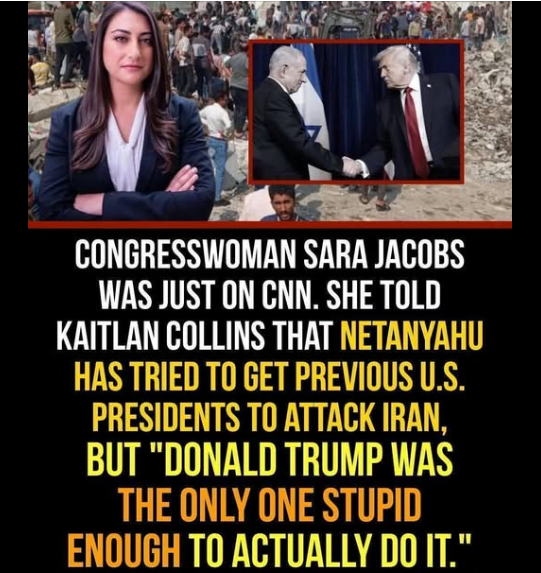
Then there’s Netanyahu. For decades, confronting Iran has been central to his political identity. With Israeli elections looming, a joint campaign against Tehran offers the optics of strength and unity. Netanyahu gets to stand tall as a wartime leader. Trump gets to wear the tough-guy hat. The timing is awfully convenient for both.
The stated objective goes beyond deterrence — it openly flirts with regime change and dismantling Iran’s military capacity. That outcome has been a long-standing dream for several Gulf states and Israel. They lacked the unilateral capacity to achieve it. Suddenly, they didn’t have to.
Publicly, Gulf leaders urged caution and diplomacy. Privately, billions flowed through business channels connected to the president’s inner circle. Concern for the cameras, confidence in the transactions.
Trump once claimed Obama would start a war with Iran to boost his political standing. Obama didn’t. Now, facing political headwinds before midterms, Trump did precisely what he once warned the country about — except this time, the financial entanglements are impossible to ignore.
If this was about security, the facts would line up. If it was about diplomacy, talks would have continued. When the explanations collapse, the incentives start talking.
And incentives rarely lie.