Dangerous Dementia Donnie
A psychologist is raising concerns about Trump’s decision-making as tensions with Iran escalate, arguing that impulsive leadership at a volatile moment carries serious risks. The White House strongly rejects the claims, framing them as political attacks rather than legitimate medical criticism.
2/22/20261 min read
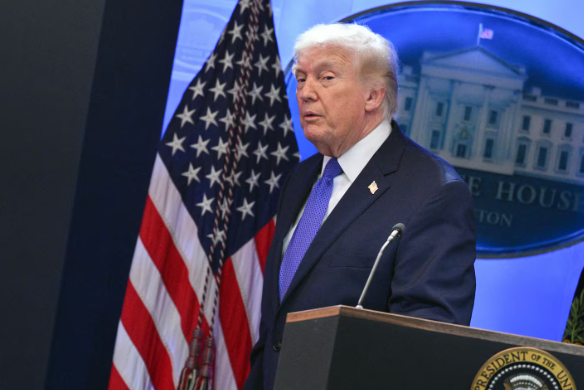
A psychologist is sounding alarms about Trump’s decision-making as he gets older, arguing that impulsiveness at the top of the food chain isn’t exactly comforting when military ships are moving around and Iran is back in the headlines. Dr. John Gartner, a former professor, claims Trump is showing signs of cognitive decline and says that lack of restraint could be dangerous in a world already running hot.
Gartner’s argument is basically this: when you combine a president who pushes against institutional guardrails with someone he believes has weakening impulse control, you get unpredictability. And unpredictability is fine when you’re choosing what to order for lunch… less fine when you’re deciding whether to escalate a conflict. He pointed to Trump’s recent comments about possibly going “a step further” with Iran — or maybe not — as an example of messaging that feels loose when stakes are high.
Trump’s camp, unsurprisingly, isn’t buying any of that. The White House pushed back hard, praising his energy and sharpness and dismissing the psychologist’s comments as partisan noise. Meanwhile, reports suggest internal debate inside the administration about how far to go with Iran, with some advisers warning against military action and others hinting it could happen soon.
So here we are. One side says this is about mental fitness and global stability. The other says it’s political mud-slinging dressed up as medicine. And hanging over all of it is a very real question: in moments where war and diplomacy sit inches apart, how steady is the hand on the wheel?