Indiana Scraps Teen Labor Tracking…. Critics Say It’s the “Honor System” Version of Child Labor Laws
Sometimes the fine print in legislation tells a bigger story than the headlines. Indiana just removed one of the few systems tracking where teenagers are working, quietly eliminating a database meant to help enforce child labor laws. Critics say the move fits neatly with the deregulatory philosophy behind Project 2025—where oversight tends to disappear faster than a teenager when the lawn needs mowing.
3/6/20262 min read
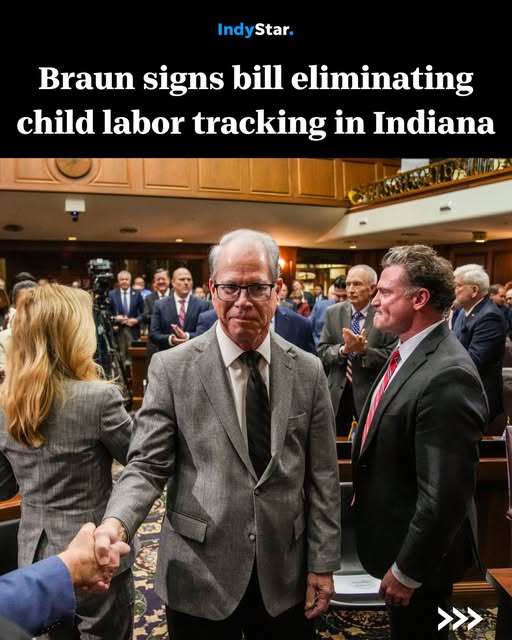
Indiana is quietly dismantling another layer of oversight meant to track teen labor…. and the timing lines up rather neatly with the broader deregulatory philosophy championed in initiatives like Project 2025.
On March 4, Mike Braun signed legislation eliminating the state’s Youth Employment System, a database that tracked where minors under 18 were working. Under the old law, businesses with five or more teenage employees had to register and report basic information—how many minors they employed and when those teens started or left their jobs.
The new law wipes that system off the books. Employers will no longer report hiring or separation dates for teen workers, and the Indiana Department of Labor will no longer maintain the database that helped inspectors track compliance with child labor laws. Translation: fewer records, fewer paper trails, fewer questions.
This database was originally created after Indiana eliminated work permits for minors and removed the Indiana Department of Education from child-labor oversight. Critics say eliminating the system further weakens already thin guardrails meant to prevent minors from being placed in hazardous jobs.
Supporters see it differently. State Sen. Linda Rogers argued the reporting system was simply too burdensome for businesses. Tracking when teens start and leave jobs, she said, can be difficult—especially if students leave temporarily for school activities or never return.
Opponents say removing the system is exactly the wrong direction. Nina Mast of the Economic Policy Institute warned the reporting requirements exist for a reason: to protect minors from dangerous work and exploitation.
The change takes effect July 1.
Viewed through the broader policy lens, critics say the move fits neatly into the deregulatory worldview promoted in Project 2025—a philosophy that tends to treat government oversight the way a teenager treats chores…. something best eliminated so nobody has to keep track of what’s going on. 🧹
Whether that leads to more opportunity for teens or fewer protections for them is exactly the debate now unfolding. In policy terms it’s called deregulation…. though skeptics might call it the “honor system for employers.” History suggests the honor system works wonderfully—right up until someone realizes nobody is actually checking the ledger. 📉