JP Morgan thought ...and STILL thinks Trump is a BAD RISK !!
JPMorgan Chase has formally acknowledged that it closed accounts belonging to Donald Trump in the weeks following the Jan. 6 attack on the U.S. Capitol. The disclosure, made in a court filing, is part of Trump’s $5 billion lawsuit alleging the bank “debanked” him for political reasons. The case now places one of the nation’s largest financial institutions at the center of a high-stakes fight over politics, power, and the boundaries of banking discretion.
2/22/20261 min read
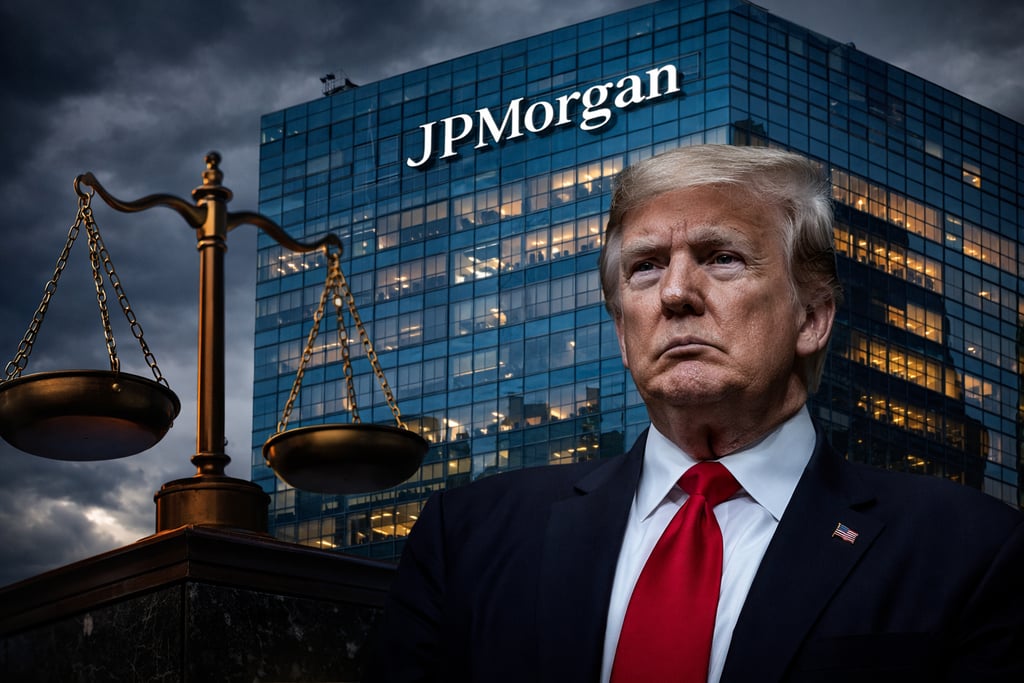
JPMorgan Chase has, for the first time in writing, acknowledged that it closed bank accounts belonging to Donald Trump and several of his businesses in the aftermath of the Jan. 6, 2021 attack on the U.S. Capitol. The admission appeared in a recent court filing tied to Trump’s $5 billion lawsuit against the bank and its CEO, Jamie Dimon, over what Trump calls politically motivated “debanking.”
In the filing, a former JPMorgan executive confirmed that in February 2021 the bank notified Trump that certain accounts within its private and commercial banking divisions would be closed. Until now, the bank had never formally acknowledged in writing that it shut down Trump’s accounts following Jan. 6, previously citing client privacy rules and speaking only in general terms about how it handles account closures.
Trump originally filed the lawsuit in Florida state court, alleging the bank’s actions disrupted his businesses and amounted to trade libel and violations of unfair trade practices laws. JPMorgan is now seeking to move the case to federal court and shift jurisdiction to New York, where the accounts were held and much of Trump’s business activity was based at the time.
Trump’s legal team also claims the bank placed him and his companies on a reputational “blacklist” that could prevent them from opening accounts elsewhere, though the specifics of that alleged list have not been detailed. JPMorgan has said the lawsuit lacks merit and that it will respond once the claims are more clearly defined.
The dispute centers on “debanking,” a term used when financial institutions close accounts or refuse services such as loans. Once a niche banking issue, debanking has become politically contentious, especially among conservatives who argue that banks have used “reputational risk” standards to discriminate against them after Jan. 6. Since returning to office, Trump’s regulators have moved to limit banks’ ability to cite reputational risk as grounds for denying service.
This is not Trump’s only such case. The Trump Organization has also filed suit against Capital One over similar allegations, and that case remains ongoing.