The Impact of Wage Cuts on Miners during the Great Depression
Labor history isn’t some side chapter in Kentucky’s story .... it is Kentucky’s story. 🛠️⛏️
2/16/20262 min read
Labor history is KY history.
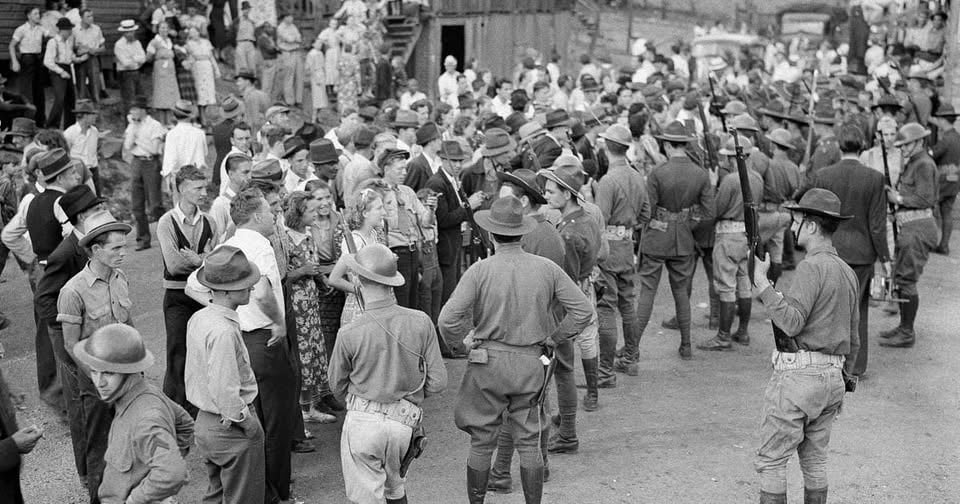
On February 16, 1931, coal operators in Harlan County cut miners’ wages by 10%, sparking a strike that would become one of the most famous labor battles in Kentucky history. Miners faced evictions, violence from company guards and law enforcement, and the constant threat of retaliation ....but they stood together in solidarity.
Florence Reece, whose husband was a union leader, famously wrote the labor anthem “Which Side Are You On?” in response to the violence.
The Harlan County War .... often called “Bloody Harlan” .... was a bitter, drawn-out labor conflict that gripped Harlan County, Kentucky, through much of the 1930s. What began as wage cuts in 1931 exploded into years of strikes, gun battles, bombings, evictions, and political showdowns between coal miners and union organizers on one side, and coal companies backed by local law enforcement on the other. It was not a brief flare-up. It stretched from 1931 to 1939 and became one of the most infamous labor struggles in American history.
Those known to support the union were fired and thrown out of company housing. Entire families were forced into tents. Most of Harlan’s towns were owned by coal companies, so displaced miners crowded into the few independent communities that would take them. At the height of the first strike, thousands were out of work while armed mine guards, deputized with full police powers, protected strikebreakers.
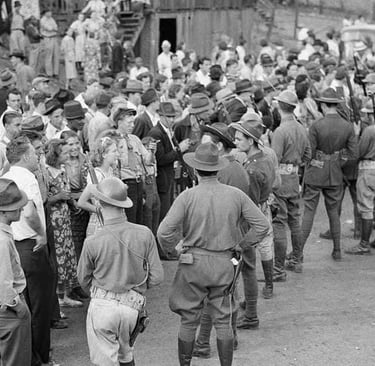
Violence escalated quickly. Gunfights broke out between strikers and company guards. The most infamous clash, the Battle of Evarts in May 1931, left three company men and one miner dead. The Kentucky National Guard was called in multiple times, but miners often felt the troops sided with operators rather than protecting their rights. Public gatherings were broken up, union rallies tear-gassed, and civil liberties suspended. By mid-1931, the first major strike collapsed without concessions.
Other unions, including the Communist-affiliated National Miners Union, attempted to step in, but they struggled to gain lasting footing. Federal reforms during the New Deal, especially the Wagner Act of 1935, strengthened workers’ legal rights to organize and eventually shifted the balance. Even then, resistance in Harlan remained fierce, with more violence, beatings, and troop deployments before union representation finally took hold in what had been one of the most anti-union coal regions in the country.
The conflict left an uncertain number dead and scarred an entire generation. It also gave the nation enduring symbols of labor resistance. Florence Reece wrote “Which Side Are You On?” after deputies raided her home looking for her husband, a union organizer. Writers and activists documented the struggle, and decades later films like Harlan County, USA revisited the story.
Bloody Harlan was more than a local labor dispute .... it was a national test of whether workers had the right to organize without fear of eviction, blacklisting, or bullets. In the end, it reshaped labor relations in Kentucky and became a defining chapter in American labor history.